

September 1, 1939 was a Friday.
It was also the day everything changed in Poland. Yes, the Nuremberg Laws had stripped German Jews of their citizenship. Yes, Kristallnacht had destroyed synagogues in Austria. But this was Poland.
It had been over 600 years since King Casimir III welcomed the Jews with open arms, and since then a Jewish community thrived in the country. Jews built ornate synagogues, developed youth movements, and studied in Yeshivas. They wrote books, acted in theaters, and played in sports leagues. Yes, there were pogroms, but there were also 3.5 million Jews in Poland. What could possibly happen?
Friday, September 1, 1939 changed that.
Nazi Germany invaded Poland, and nothing was ever the same again for any of the country’s Jews. I really wonder what Shabbat was like that evening. Did they know that many of them would spend their remaining Shabbats in ghettos, cattle cars, and in concentration camps?
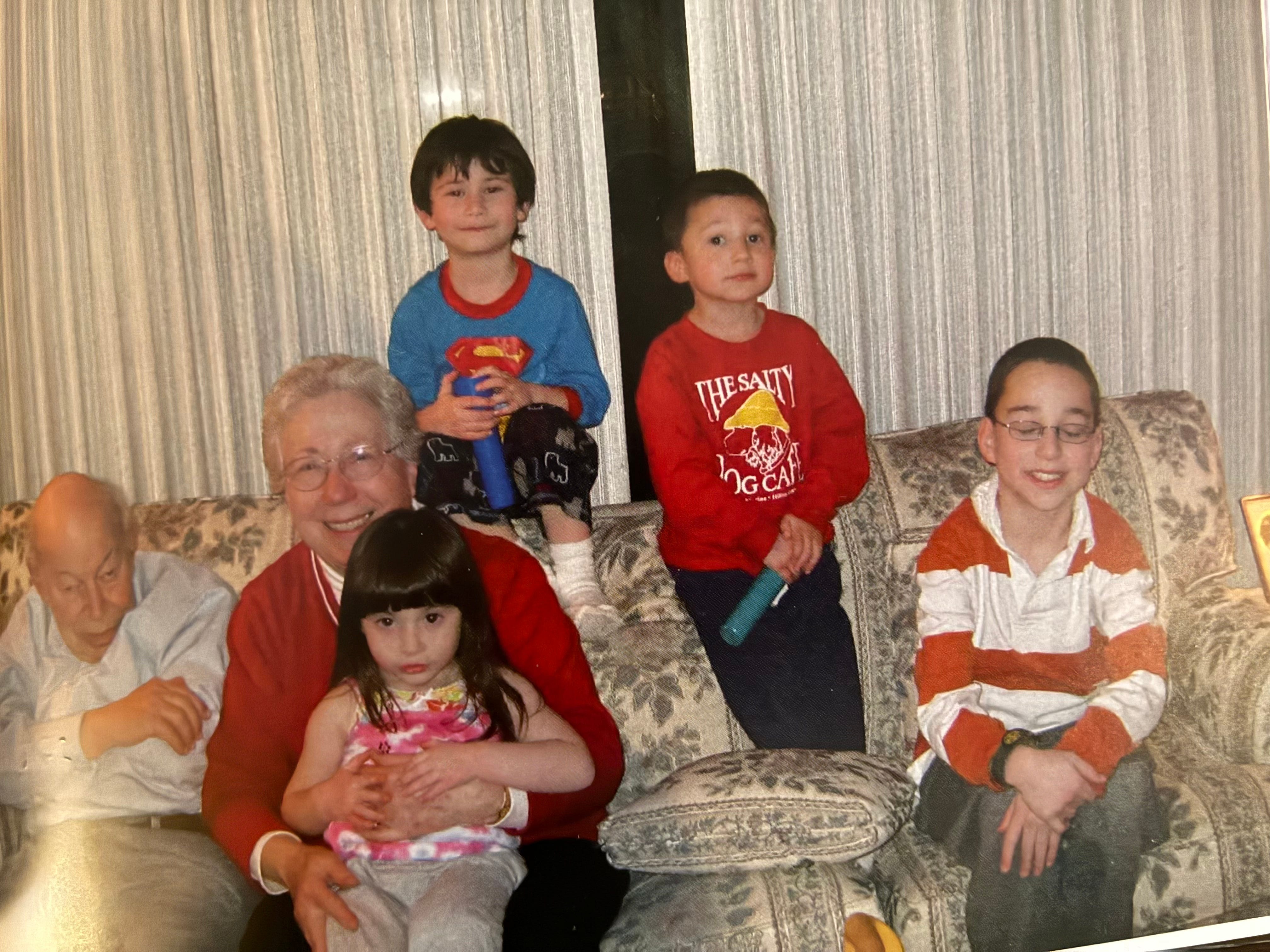
I think about that last Shabbat for my grandpa, his brother, and his two parents. Until then, they had lived a relatively quiet Jewish life in Makow Mazowiecki, a small town about 56 miles from Warsaw.
In JewishGen, Makow resident and Holocaust survivor Meir Rubin described what Shabbat was like in their village that week:
In Makow, Friday was the traditional market day. At 9 AM, the radio announced that war had broken out–Germany had invaded Poland and bloody battles had begun. At around lunch time, the peasants scattered from the marketplace, planes were flying overhead and the air was heavy with worry and, indeed, panic. Some of the local Jews congregated in synagogues, while others huddled in their homes depressed, wondering what tomorrow might bring.
As it got darker, the curtains were drawn, the Shabbos candles flickered out and the houses fell dark.
That was the end of Shabbat for the Jews of Makow Mazowiecki. My grandfather and his family headed that Friday to Warsaw, about 56 miles away. They later escaped the worst of the Holocaust, fleeing east into a Siberian labor camp. I wonder what Shabbat was like in that labor camp. Could they light candles or drink grape juice? And I wonder if they celebrated Shabbat in Traunstein, the displaced persons camp they lived in for four years. Did the Jewish refugees of Traunstein sing HaMotzi and eat challah?
I’m probably never going to know about those ten years of Shabbats — those 534 Shabbats between September 1, 1939 and November 29, 1949, when my grandpa and his family landed on Ellis Island. But I know he spent his remaining 3,388 Shabbats surrounded by love, family, and good food. I’m forever grateful to have spent countless Friday night dinners with him before his passing in 2014.
Friday, January 9, 2026.
4,506 Shabbats after September 1, 1939.
This was a Shabbat I’ll never forget. I had the opportunity to celebrate in Warsaw alongside dozens of Jewish students from Ohio State and universities in Poland. How incredibly meaningful to mark Shabbat in Warsaw, the city my grandfather fled to 4,506 Shabbats earlier as his innocent childhood in Poland ended.
It’s difficult to put into words how powerful this experience was for me, and for the 19 Jewish Ohio State students on this trip. I read advice on writing once that said “if the words don’t come to you, maybe you’re thinking in the wrong language.” So maybe the right words are in Hebrew.
In the Kiddush blessing, which my grandfather always led for our family, it says V’Shabbat kodsh’cha b’ahava uv’ratzon hinchaltanu.
“In love and favor You have given us Your holy Shabbat as an inheritance.”
That’s how I felt that Friday night. I was inheriting Shabbat from hundreds of years of Dobreses who hadn’t celebrated the day of rest in their home country for 4,506 Shabbats.
May this Shabbat bring peace, rest, and happiness.
Shabbat Shalom.
 | A guest post by
|
Ethan....well written, moving and poignant! Grandpa is proud!